
Melting trees
Posted on February 28, 2012
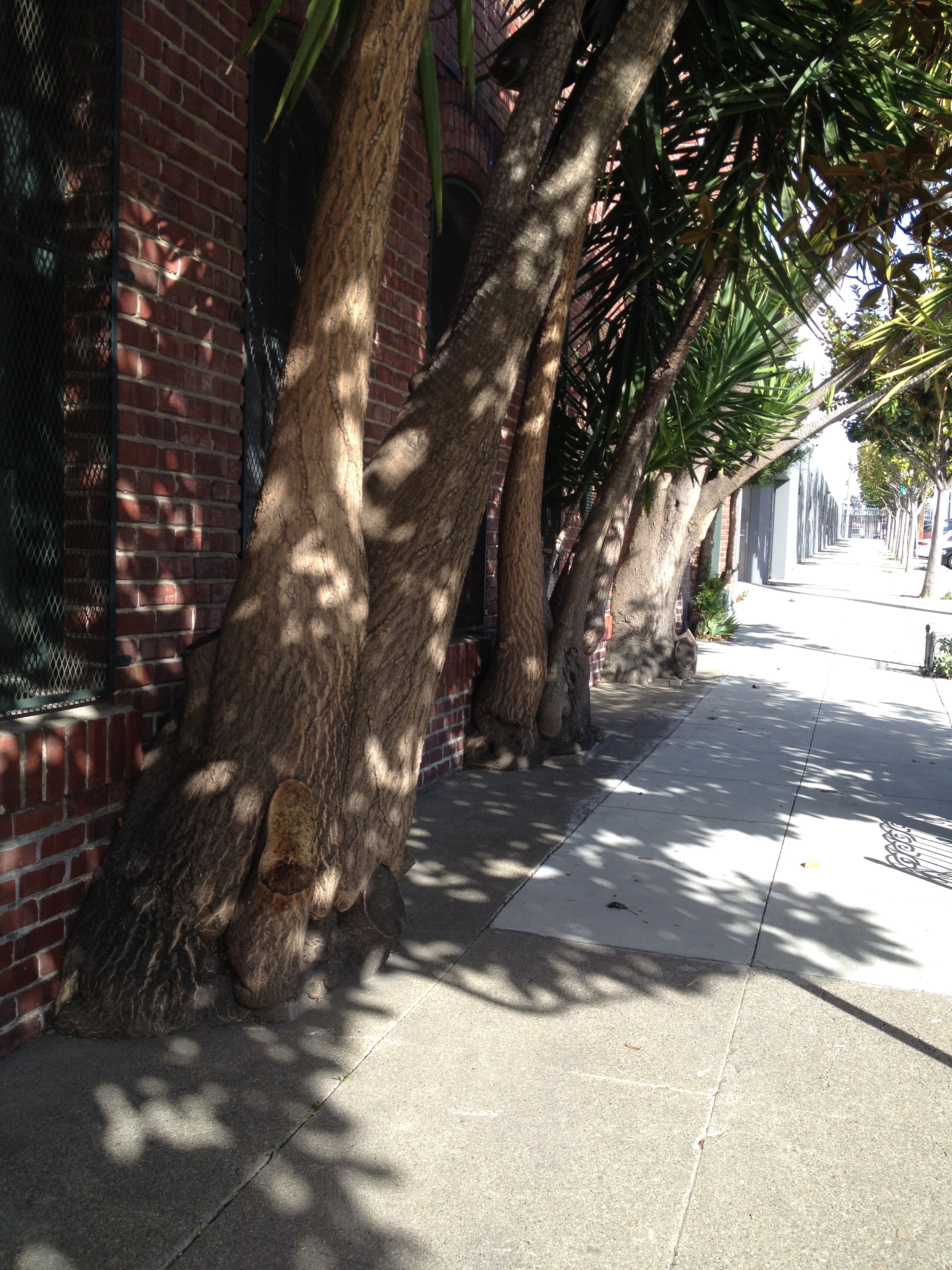
Look at how these yuccas are oozing out of the building!

Neat
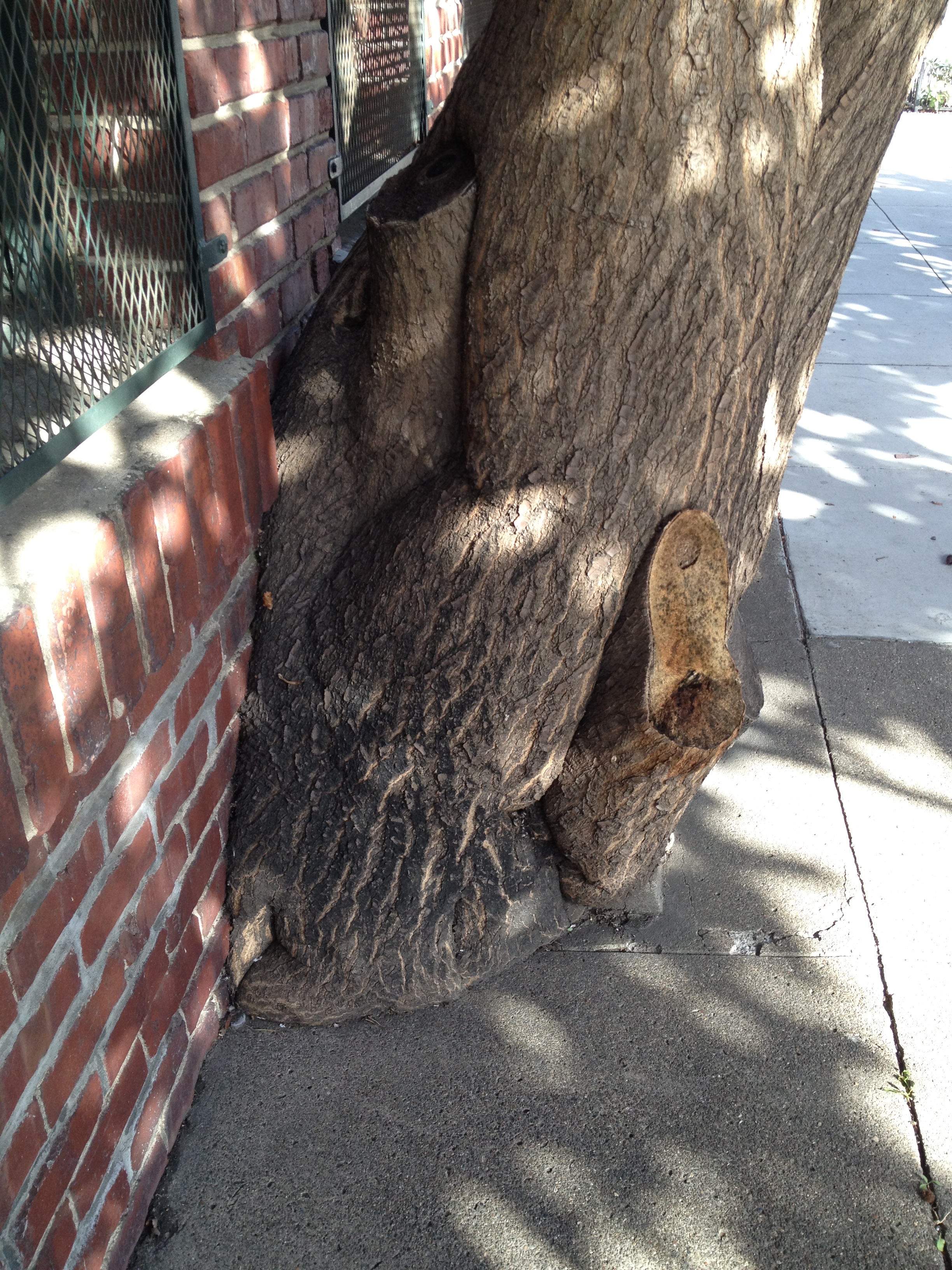
Trees are just going to do what they want, building or no building. Always a good plan to check the mature height (and width!) of a tree before planting, hahahaha …
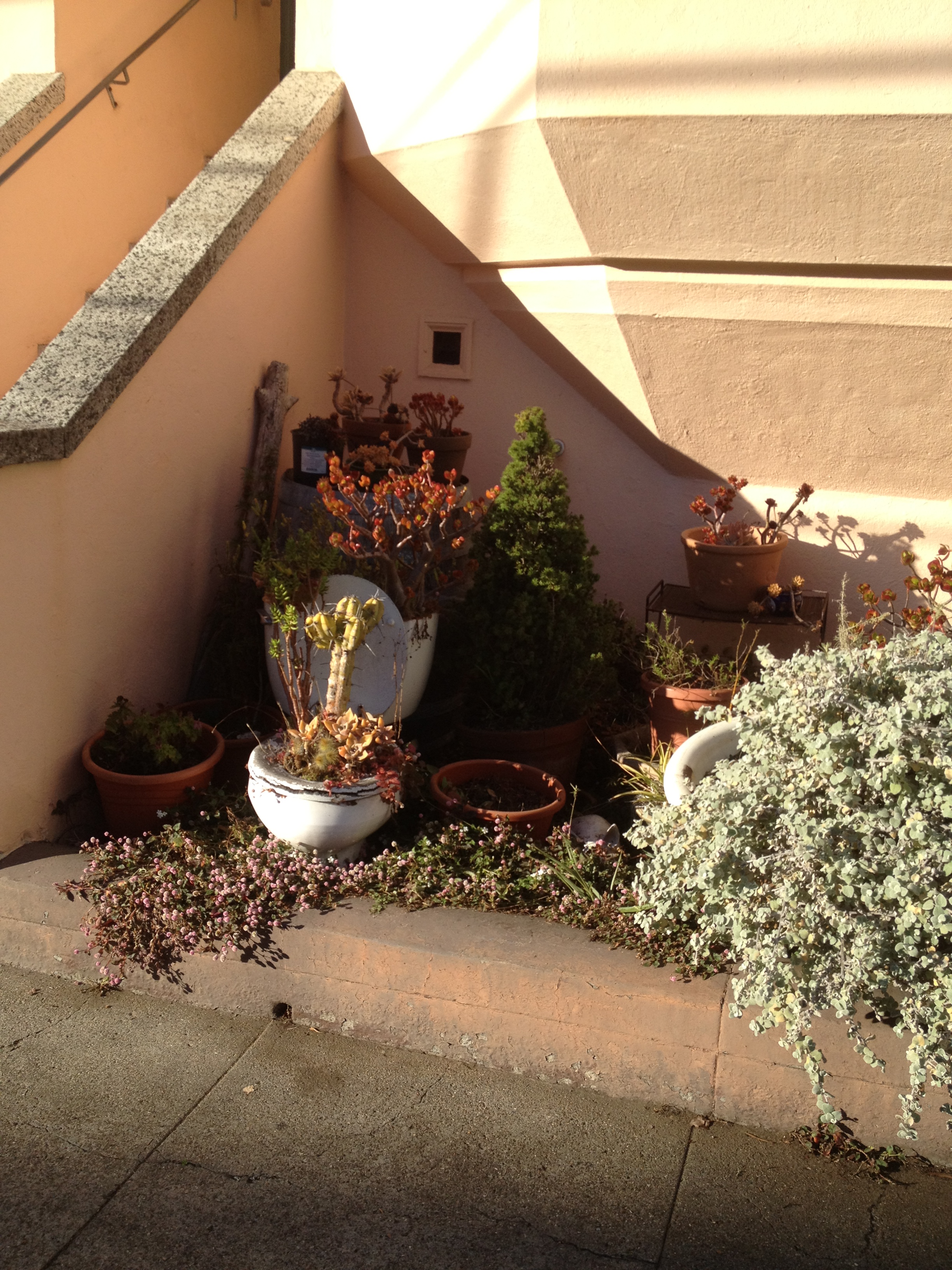
Still Life with Toilet
Posted on February 27, 2012
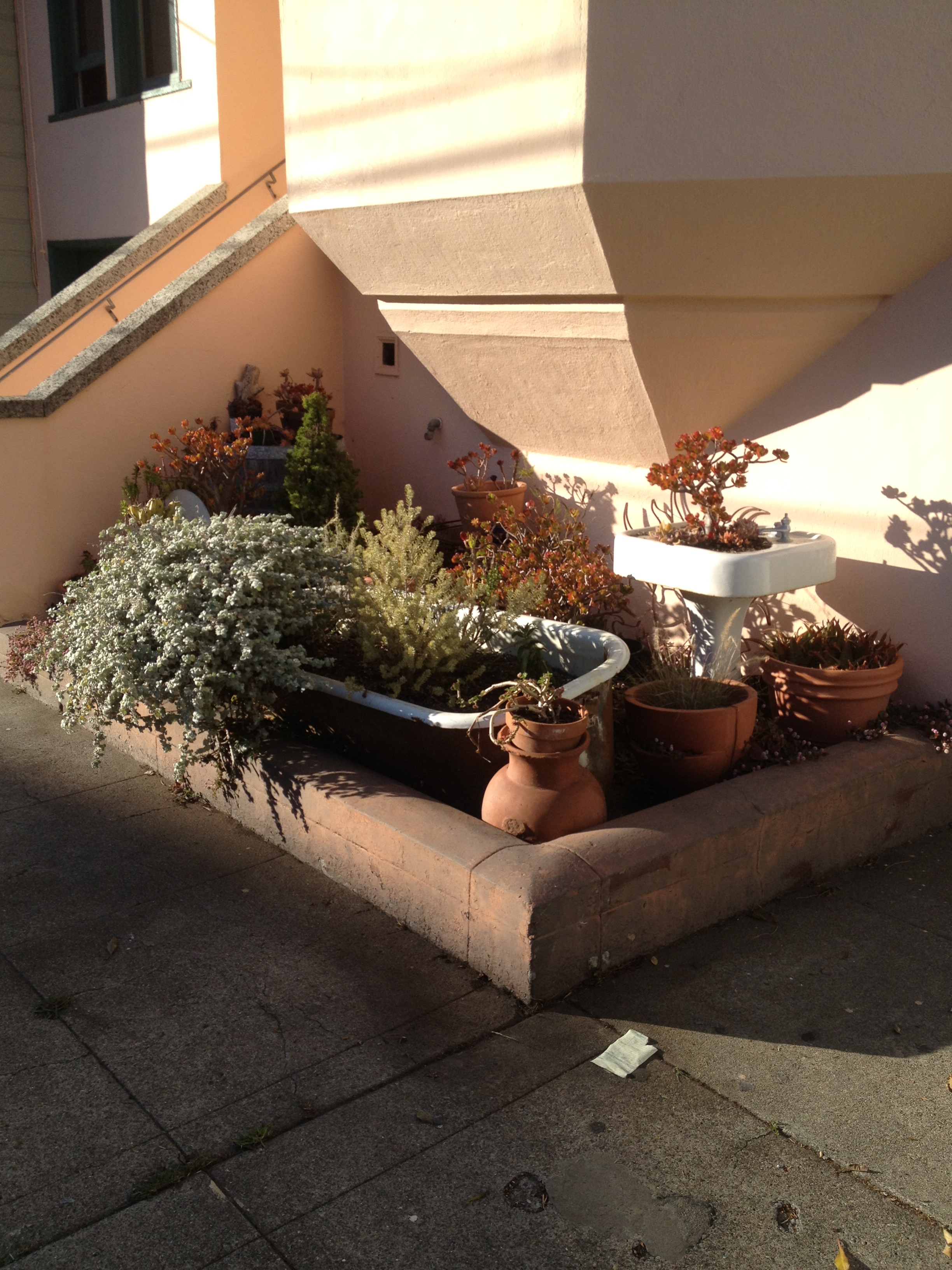
Re-purposing decommissioned porcelain from bathrooms for use as garden planters is undoubtedly not everyone’s style. Sometimes the attempts at funkiness and kitsch, once executed, can be a little too, well, trashy and haphazard. However, this aesthetic can serve many practical purposes. In a city where theft is a constant issue (sometimes even ceramic gnomes can’t protect a junkyard garden!), toilet- and bathtub-planters present a hefty challenge to potential potted plant thieves. And of course, diverting housing materials from a slow death in a landfill is always a huge bonus. In terms of design, this Inner Richmond garden makes a small rectangle look thoughtfully put together, employing different heights and a complementary scheme of colors and textures to create a coordinated flow, almost like a still life painting. And if you plant a cactus in a old toilet, rest assured no passer-bys will attempt to use it!

Pink and green shade garden
Posted on February 20, 2012
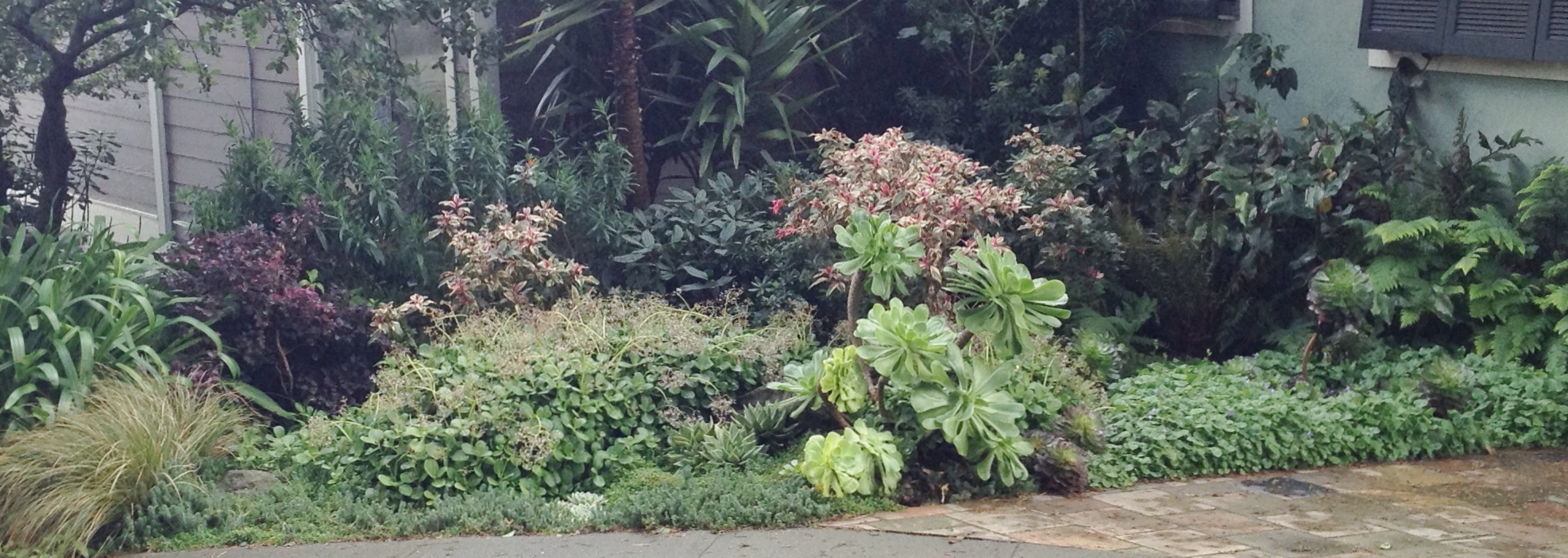


Just yellow and green
Posted on February 10, 2012
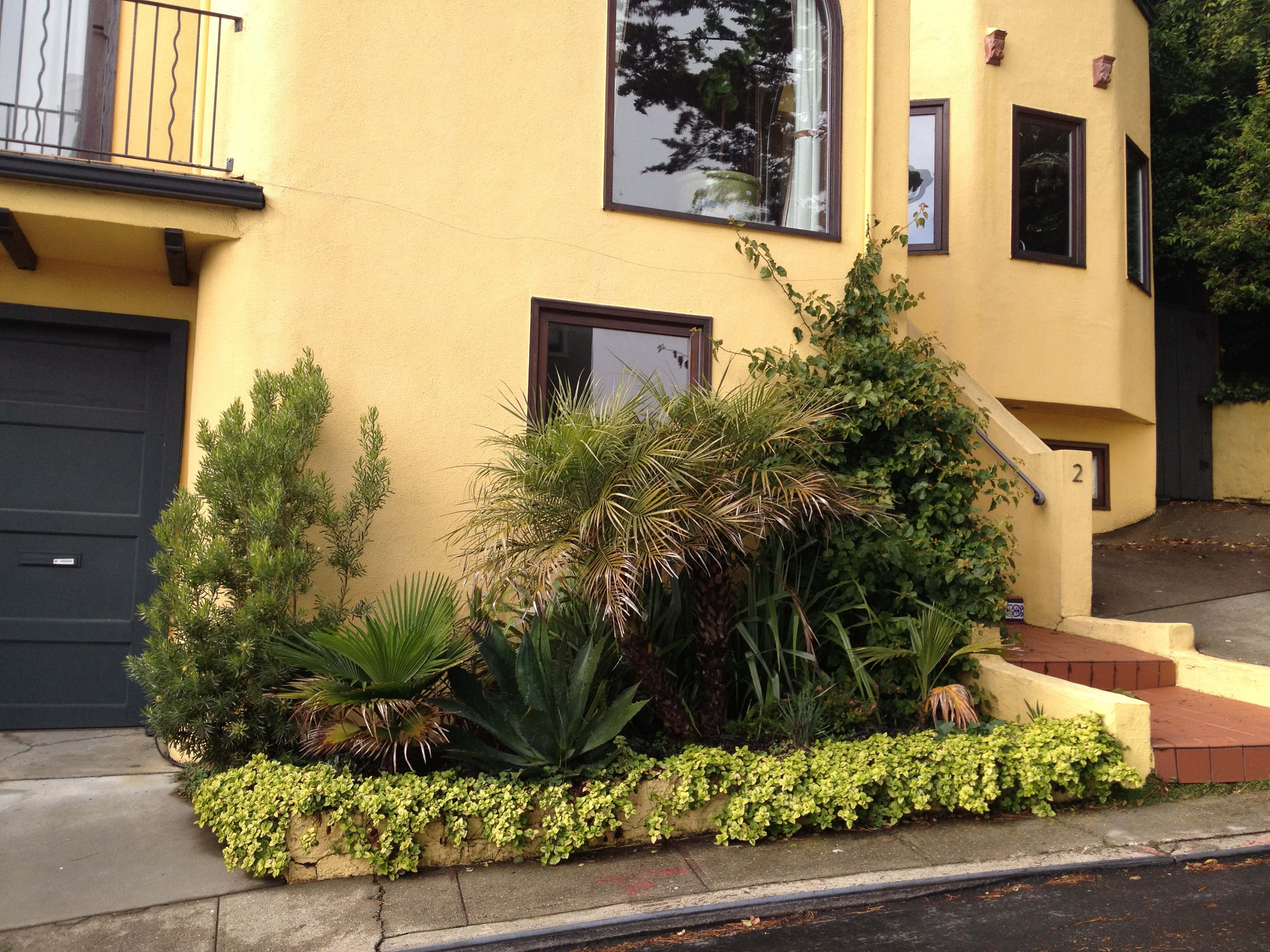
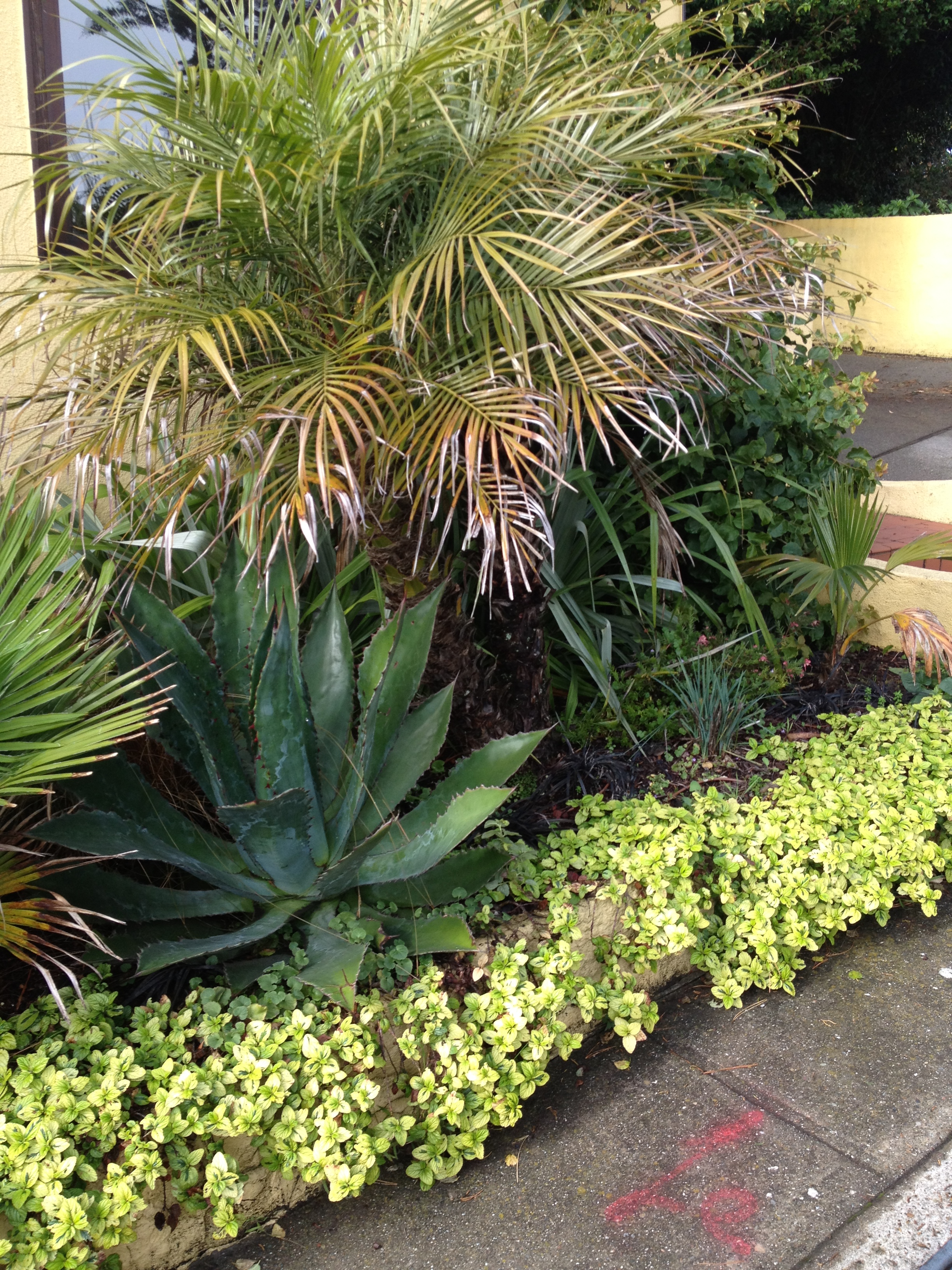
This entryway has a nice variety of textures but a pretty simple color palette of yellows and greens that look great against the buff background.

Multiple Issues, One Solution
Posted on February 7, 2012
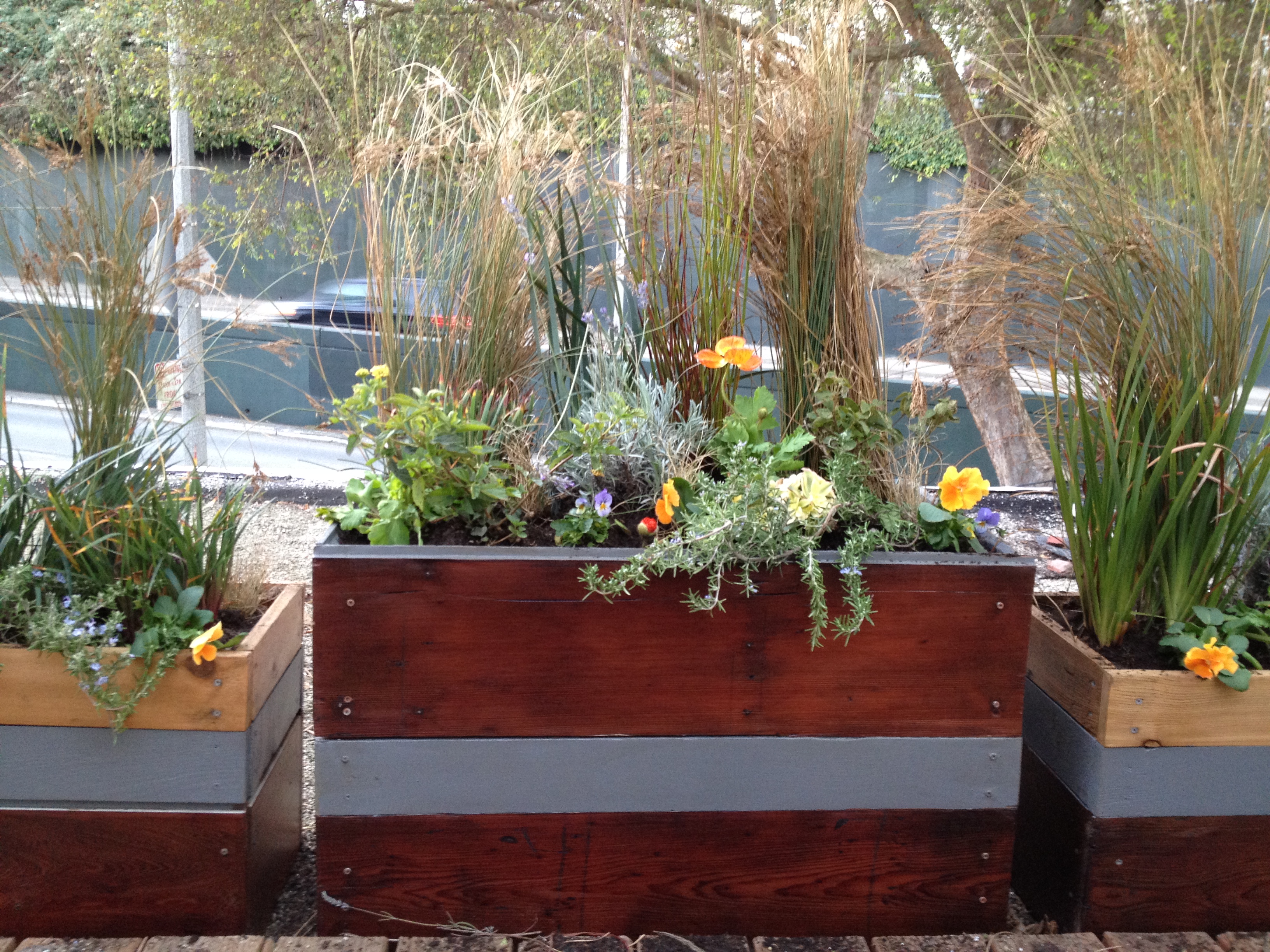 Is it possible to create a sense of privacy living on a busy San Francisco street? How can you successfully grow plants amidst a daily afternoon windstorm? What if you love the look of a Marin County meadow but are committed to City living? The answer is found in just a few planter boxes.
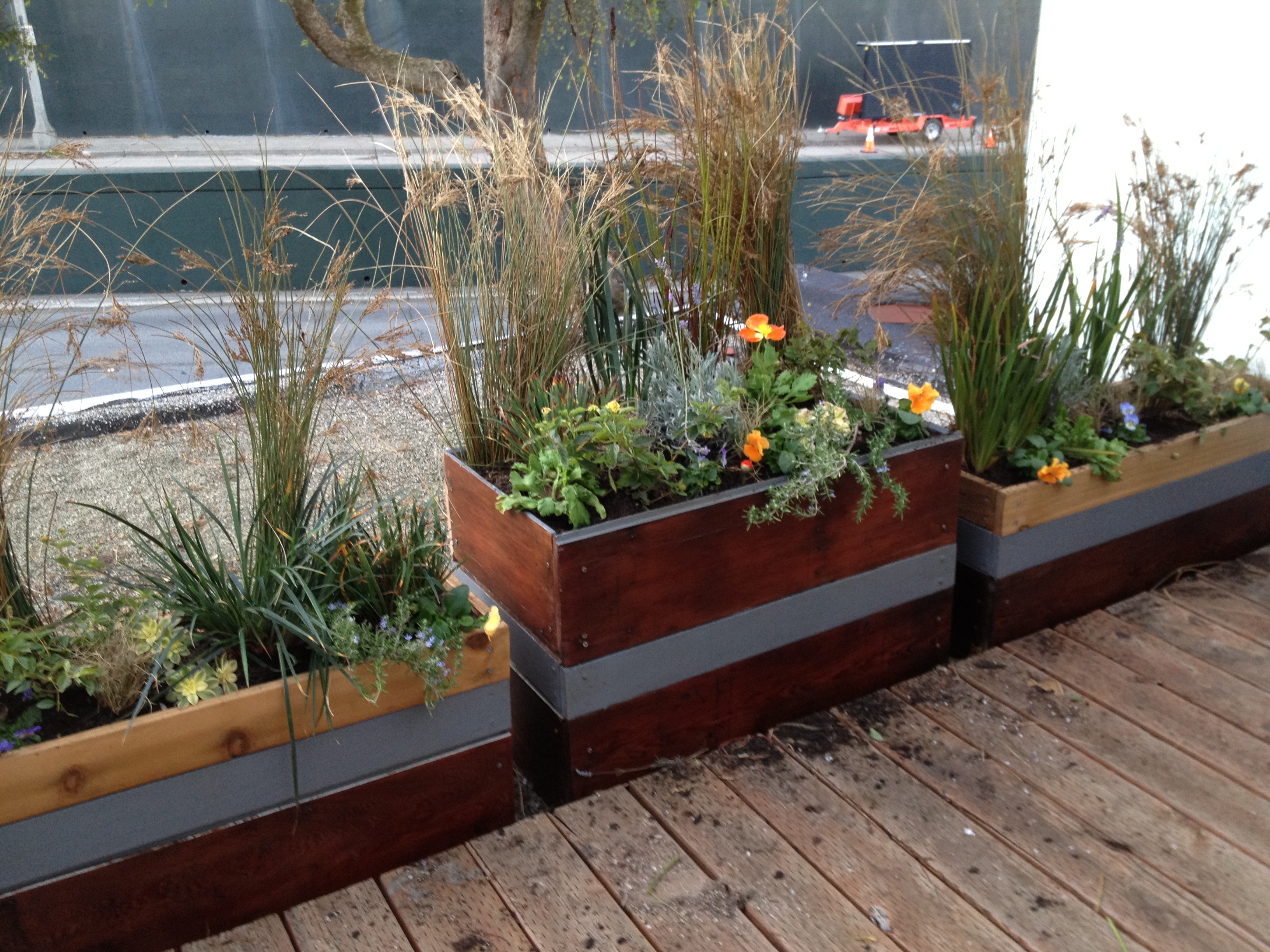
Separation between home and outside is achieved with a few clumps of juncus, a grass-like plant known as a “rush”. With its rounded blades, juncus also offers an organic and pretty windbreak, bending with the fog rather than getting tattered as would a more fragile species. Between natives like blue fescue and Pacific iris, and culinary favorites such as rosemary and lavender, the look is natural and subtle. It conjures visions of a wildflower-studded meadow, and causes the owner, who travels up north for the good surf, to dub the design a “Bolinas-themed garden”. Add the happy faces of orange pansies and the crepe-paper petals of Iceland poppies (plus some California poppy seeds in the soil, awaiting summer) for fun splashes of color.
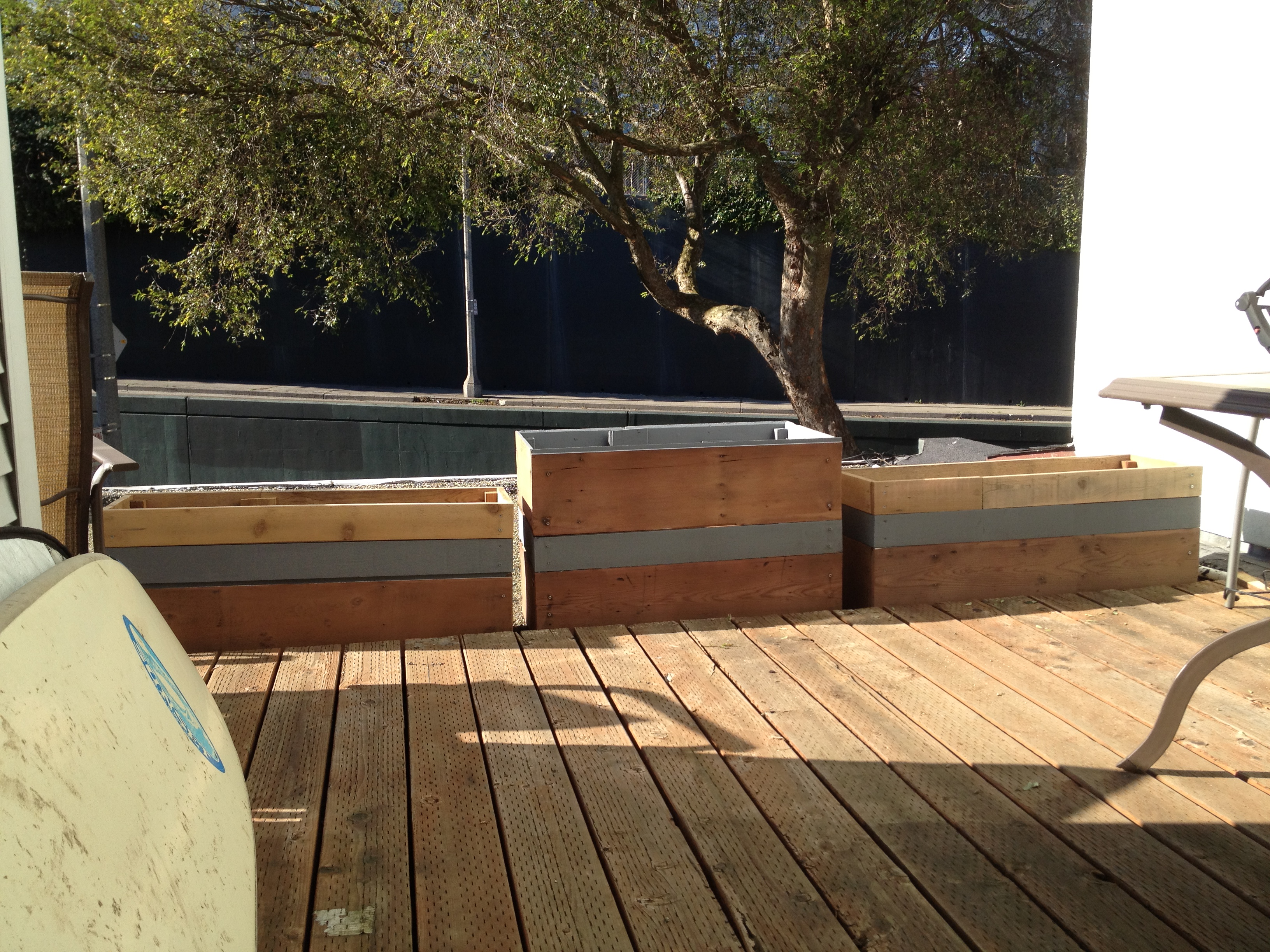
Holding the entire Bolinas-themed garden together are planter boxes made by Small Spot Gardens from reclaimed redwood and cedar from Building Resources, a non-profit organization located in Bayview that’s dedicated to reusing materials in the built environment.
Living Concrete
Posted on February 1, 2012
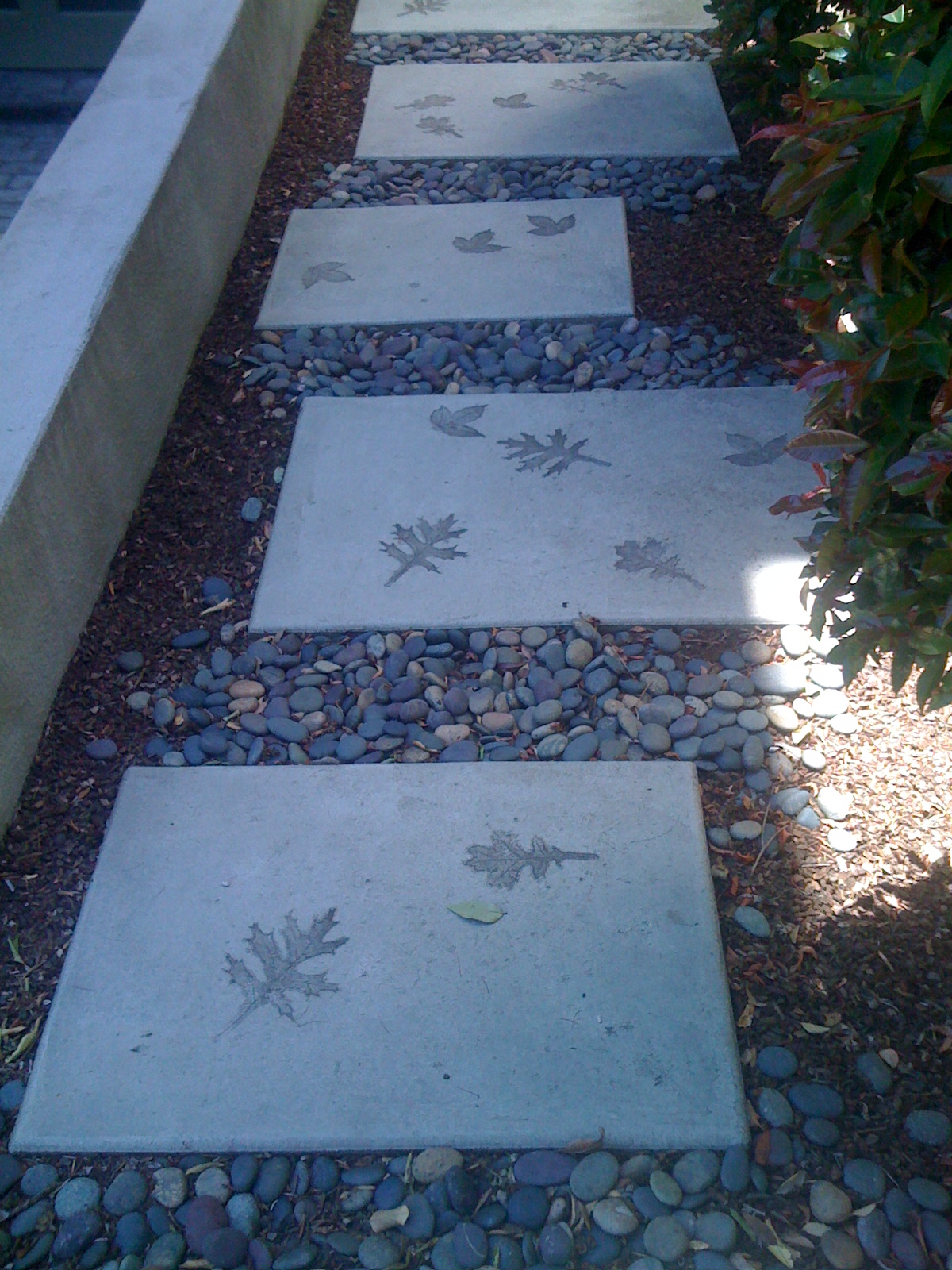
Concrete typically isn’t the most exciting material to work with. Or at least, the way we express ourselves with it tends to be rather dull: grey, square, and unimaginative. But these concrete stepping stones are eye-catching and enlivened with leaf impressions, which were simply pressed into them while they were still curing. Look at the photo, look away, now look again and mentally erase the leaves. A completely different effect, right? This path dances.
On the other side of the country, the offset stone walkway at the United States Botanic Garden in Washington, D.C. evokes a similar feeling. Just by using different widths and arranging them with a highly varying edge creates something fun and unusual, turning a small spot into art.

Steep Hill Ahead? No problem!
Posted on January 23, 2012
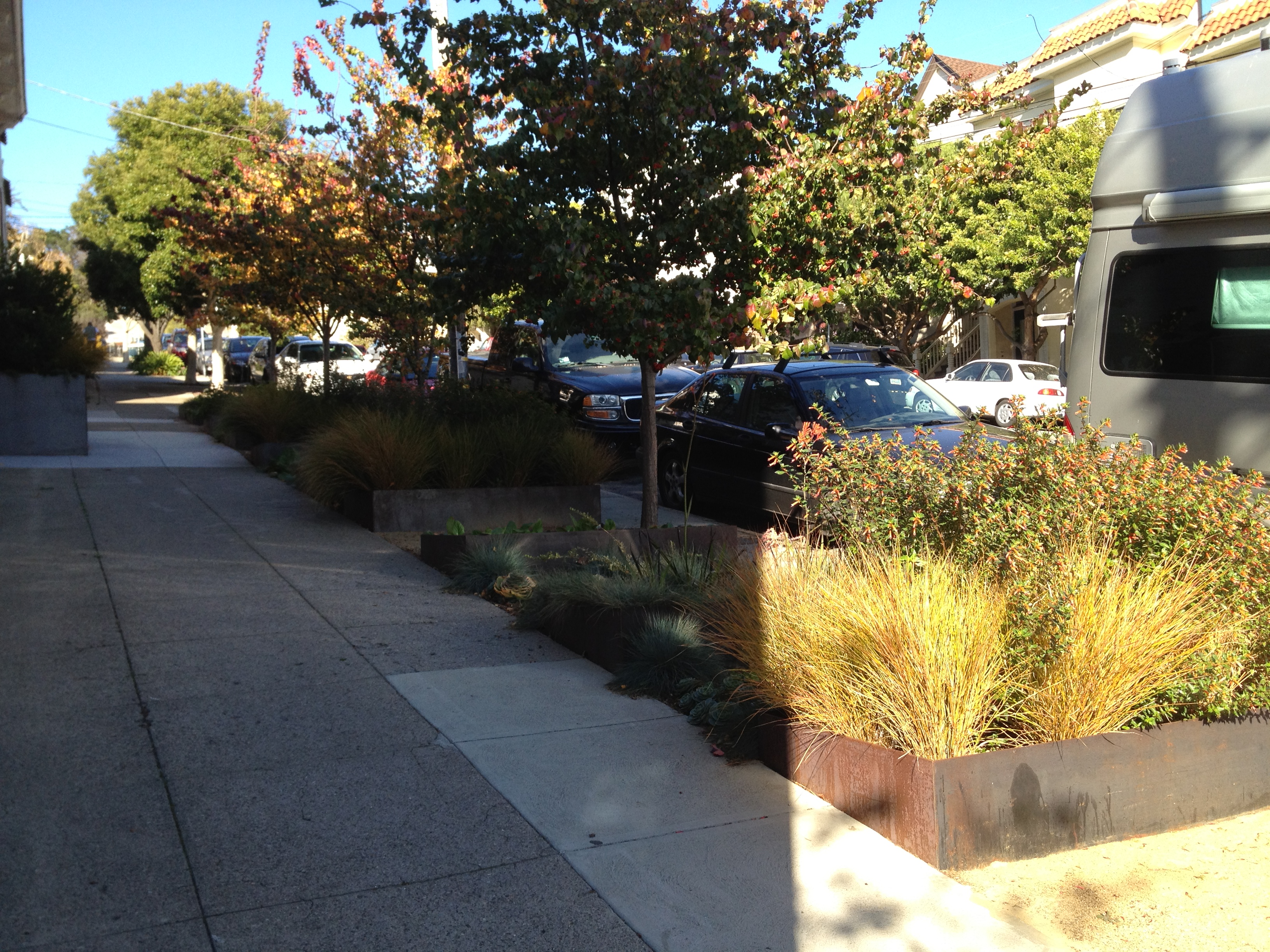
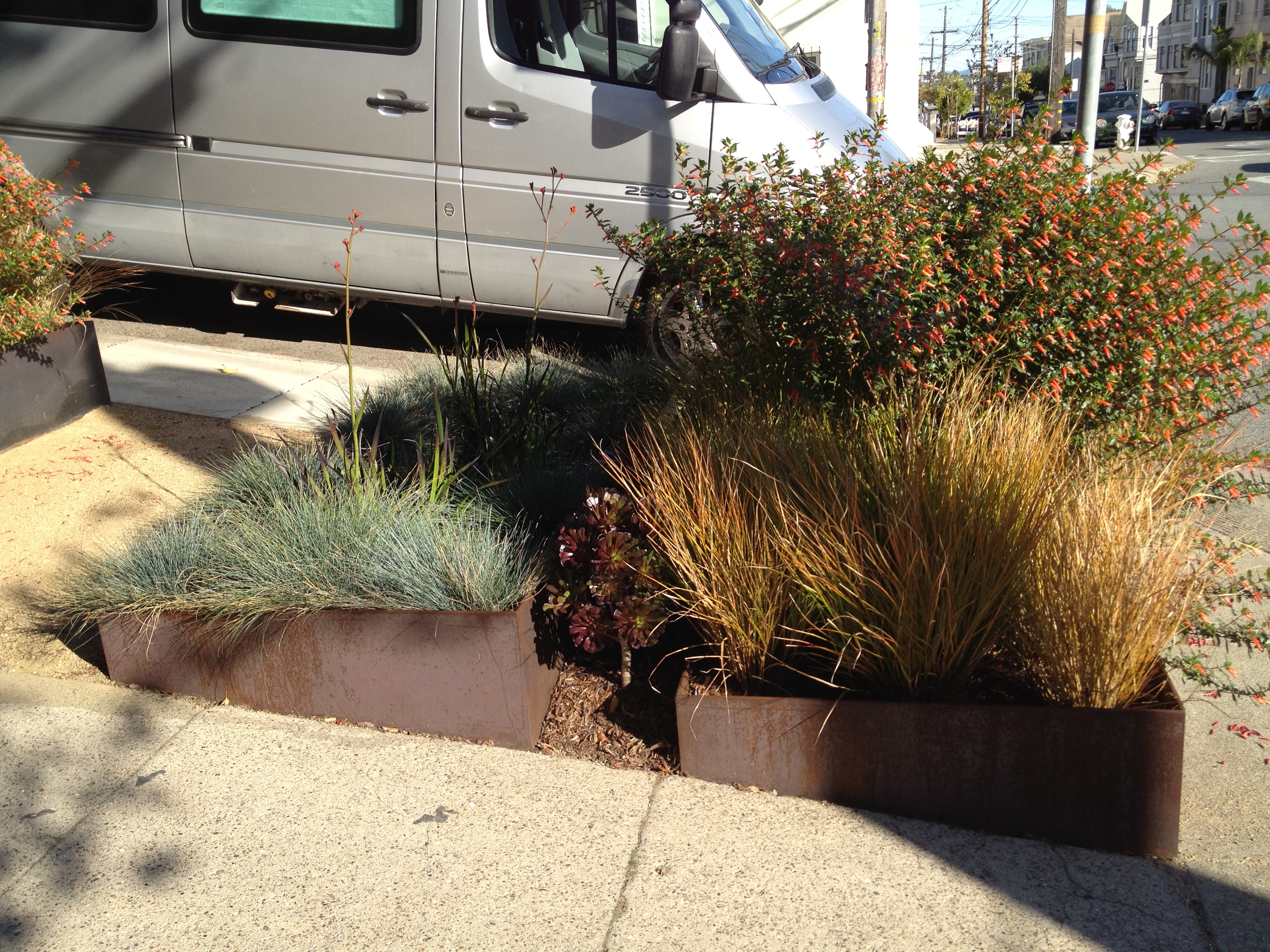
The ancient gardening art of terracing has been used all over the world for taming hillsides while simultaneously respecting their, shall we say, “hill-ness”. A steep asphalt street in Noe Valley is no exception. One of the best sidewalk gardens in San Francisco, this one uses modern-looking metal boxes, which are both durable and develop an attractive rust patina. The grey-green and golden grasses, wine-colored aeoniums, and bright red kangaroo paw offer complementary hues as well as diverse textures. And an added benefit? The small gardens are something to stop and check out while huffing and puffing one’s way up the hill!

Small ‘n’ Selective
Posted on January 4, 2012

With smaller gardening spaces, we tend to feel limited, like we have to cram it with every plant that grabs our eye at the nursery that morning. Of course, sticking to just one or two species can require a difficult level of restraint. But these two junipers possess a striking architecture, with enough difference in height and form, as well as varying shades of green, to create a powerful design. The addition of the offset rocks and gravel bed contributes to the meditative character. This small spot in the Richmond is a wonderful reminder that clichés are often true: Sometimes less is more.
Mini Desert
Posted on December 17, 2011
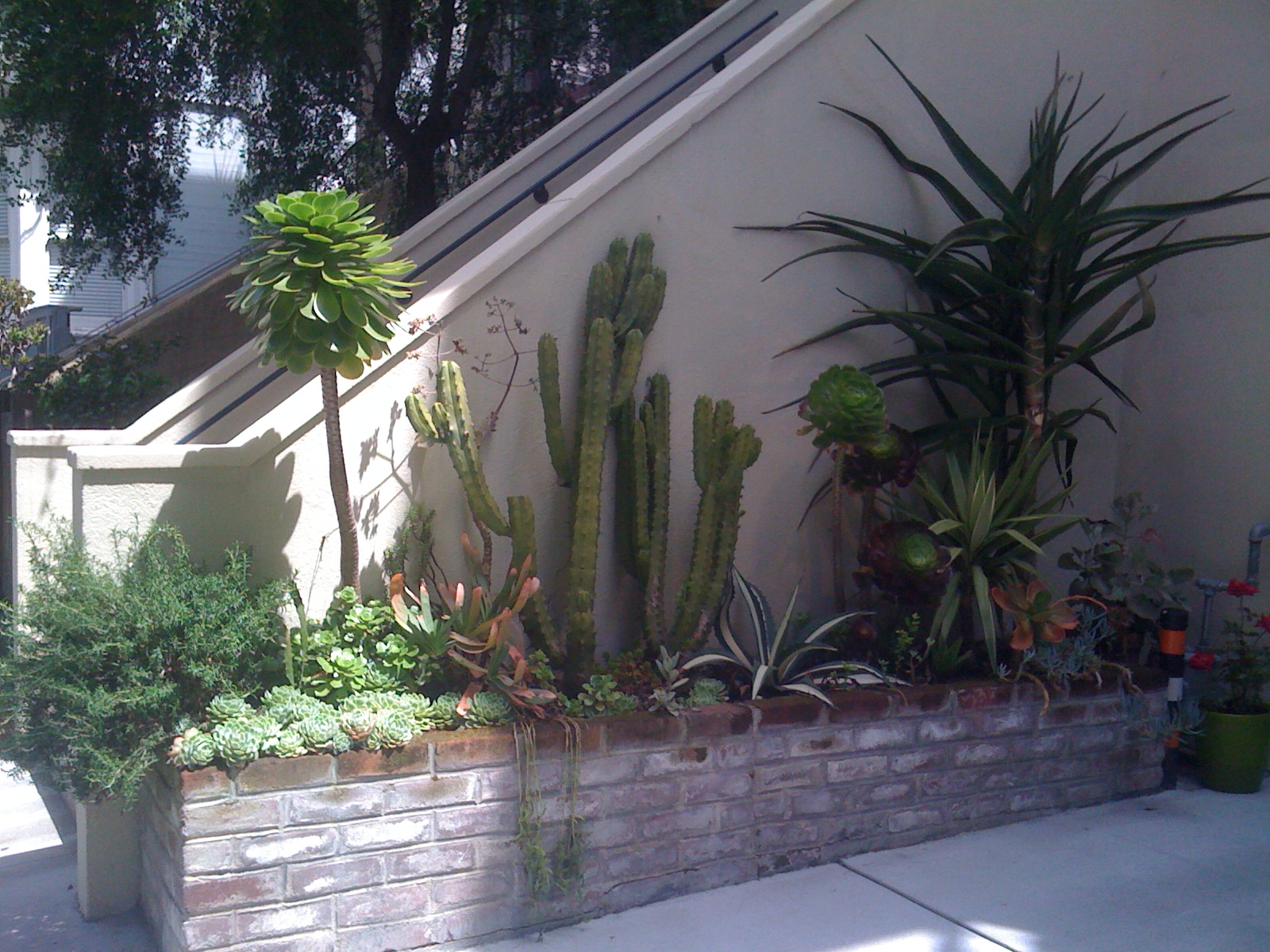
Sword-like leaves, an aeonium’s towering rosette, a cacti evoking visions of the desert Southwest: Check out the diversity of species and form here. It’s just a quick strip of soil, a plantable space that could be easily overlooked. The variety in height makes each of these plants pop — like succulent sculptures up against the wall — even though they’re all essentially the same color. And since all these plants are experts at storing water, the resource use and maintenance is about as low as it can get.
One of many horizontal fences
Posted on December 14, 2011
I really like fences that run horizontally instead of vertically. I’m sure there’s a optical illusion-like reason that they appeal to me (like they make a space look bigger?) or maybe they just seem sleeker. In any case I plan to take a lot of pictures of the ones I see around San Francisco.
Here’s the first (found in upper Noe Valley):

 smallspotgardens.com
